
Although still off the beaten path, the High Atlas Mountains have become one of Morocco’s most compelling and sought-after destinations for immersive, experience-led travel. Just 1.5 hours from Marrakech, this dramatic mountain range is an increasingly natural addition to Morocco itineraries, adding depth without requiring significant travel time.
At the heart of the region lies Mount Toubkal, North Africa’s highest peak and a defining feature of the High Atlas experience. Yet the region also works beautifully at a gentler pace, with lower valleys, village routes and foothill retreats offering immersive ways to experience the mountains without a summit climb.
Below, we explore how high-altitude trails, remote villages and refined mountain retreats make the High Atlas a strong two- to three-night extension from Marrakech.

A short drive, a different Morocco
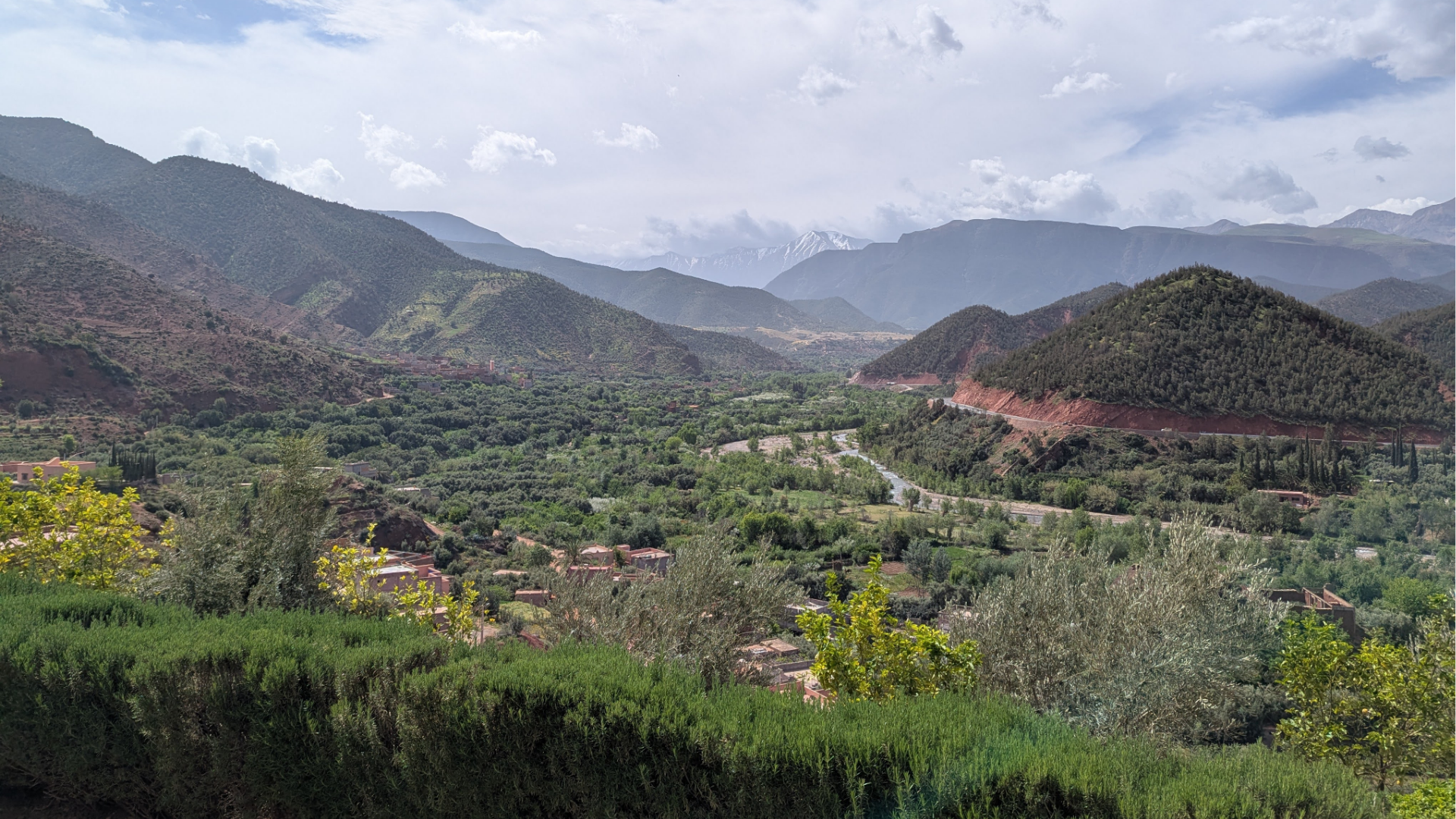
Leaving Marrakech, the road begins to climb quickly into red-rock valleys past small Amazigh villages built directly into the landscape. Terraced fields line the slopes, and mule trains can be seen bringing supplies between villages and higher camps, just as they have for generations.
This entry point gives travellers a clear sense of daily life in the High Atlas before any formal trekking begins. Life here follows daylight, weather and terrain rather than schedules, grounding both short scenic visits and multi-day stays in the lived reality of the region.
For advisors, it makes the journey itself part of the experience rather than simply a transfer, with opportunities to pause, take in the surroundings and ease into the region’s slower rhythm.

Summiting Mount Toubkal
The journey toward Mount Toubkal begins in Imlil, the main gateway village to the High Atlas trekking routes. Spending a night in the mountains is recommended to ease the transition to altitude and allow time to acclimatise.
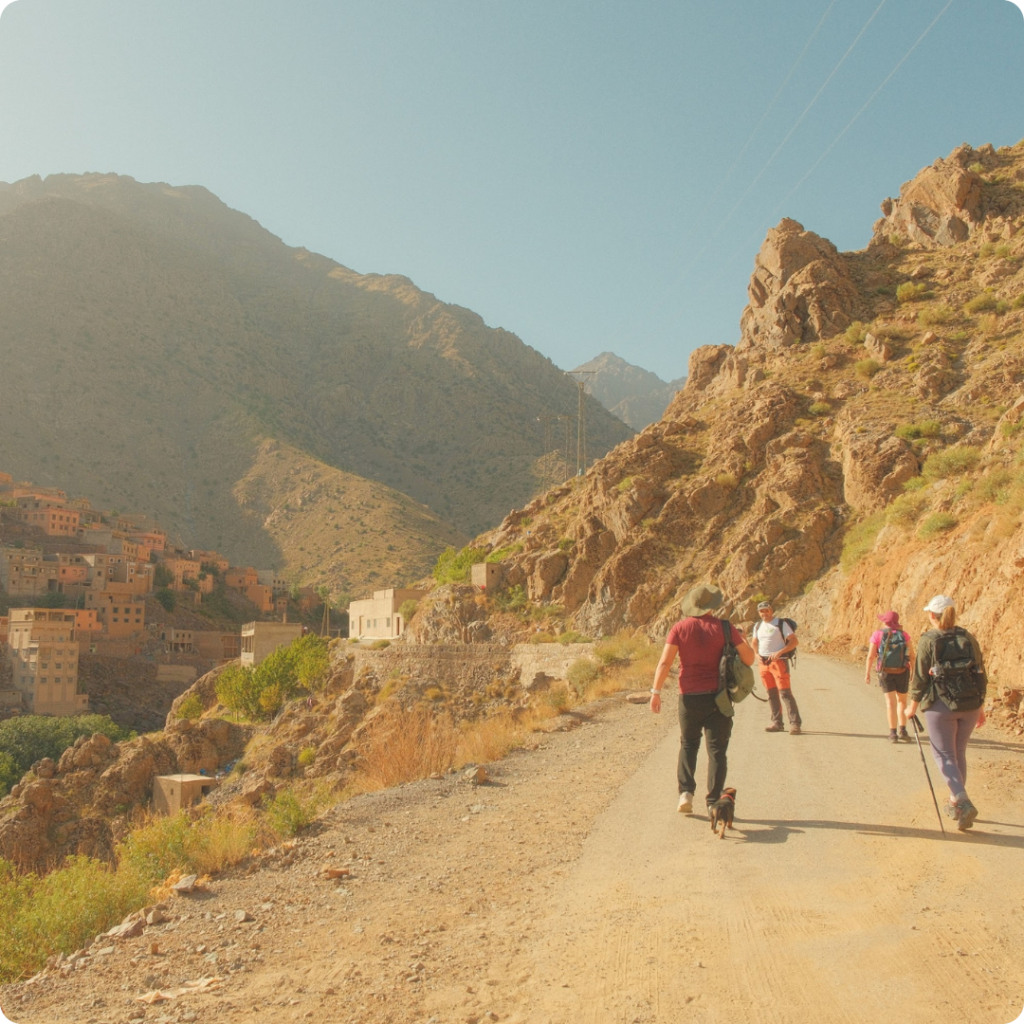
From Imlil, routes pass through a chain of mountain villages before opening into wider valleys, where mule teams transport supplies toward higher elevations. The trail is steady and exposed, with long stretches of gradual ascent as vegetation thins and the surrounding peaks become more prominent.
Simple tea stops along the way provide natural breaks before continuing the climb. As elevation increases, temperatures drop and the scale of the landscape becomes more apparent.
At base camp, the focus shifts to preparation and recovery. Accommodation is simple but well managed, with warm meals and small touches of comfort that balance the remoteness of the setting.
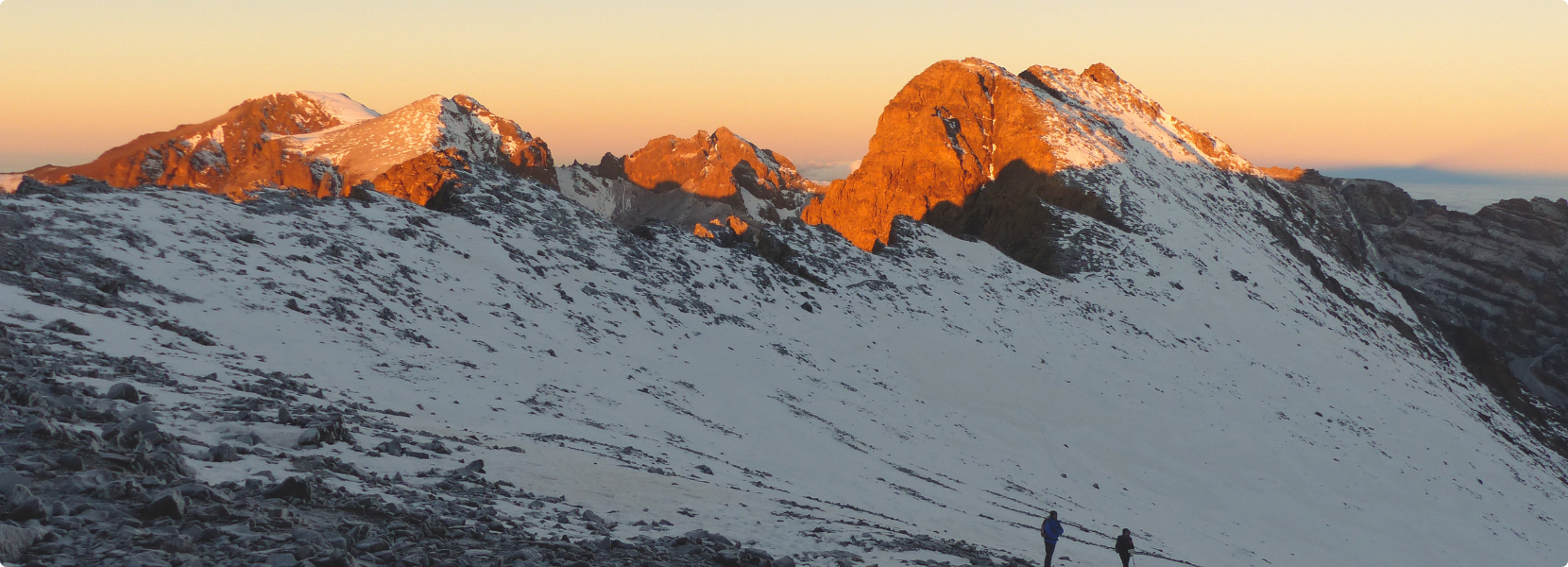
Summit attempts begin before sunrise, with a steady climb leading to wide, unobstructed views across the Atlas Mountains from the highest point in North Africa.
Important for positioning:
- Best suited to active travellers
- No technical climbing required, but reasonable fitness is essential
- Can be replaced with shorter scenic hikes for broader client appeal
Cultural encounters along the trail
Beyond the landscapes, the High Atlas is shaped by enduring Amazigh traditions. Villages are modest and functional, built from stone and earth to blend into the terrain.
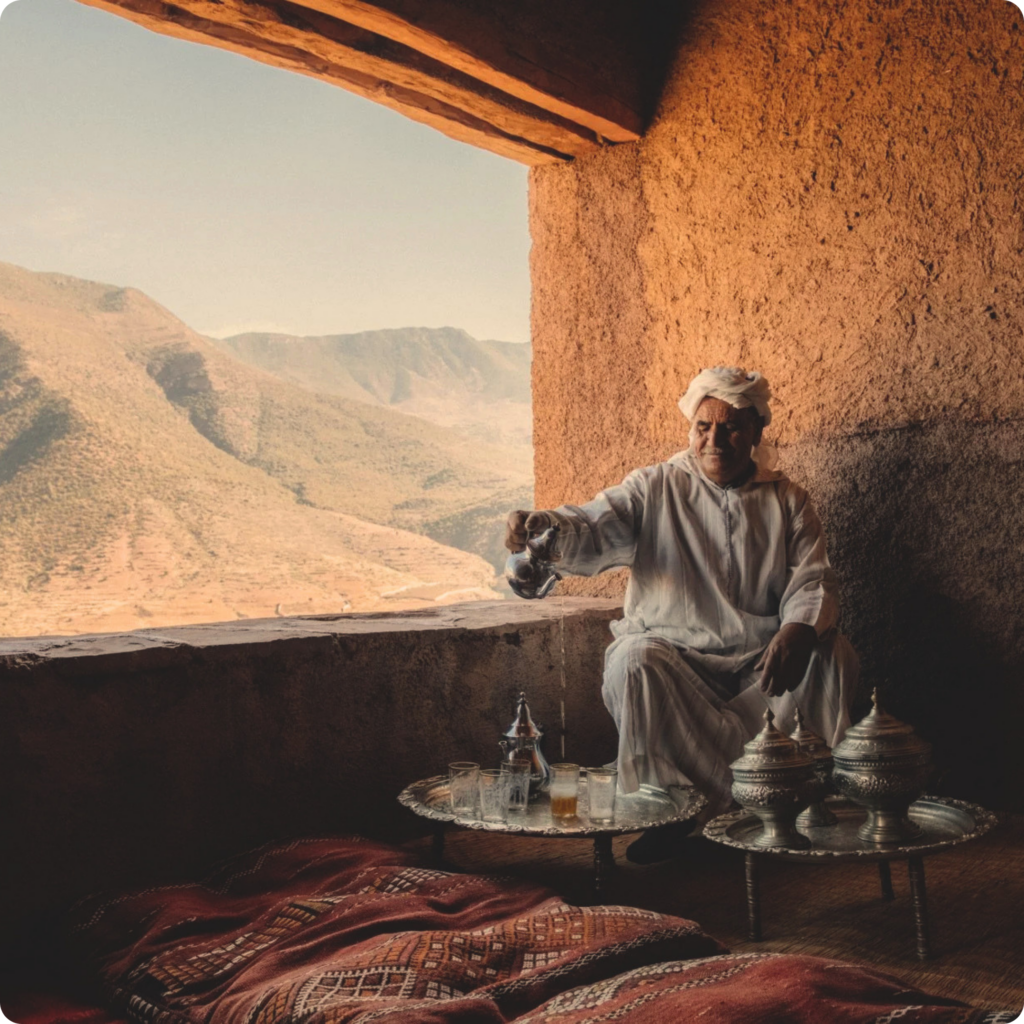
Encounters here are often simple but memorable. Tea offered on arrival, a communal meal, a homestay visit or time spent with local artisans can give travellers a closer understanding of Amazigh culture without feeling overly formal.
This is where the High Atlas adds depth to a Morocco itinerary. It brings travellers closer to the rhythms, beliefs and traditions of the region, including small shrines that remain in use along certain routes and reflect a long-standing connection between community and land.
Where to stay: Comfort in a remote setting
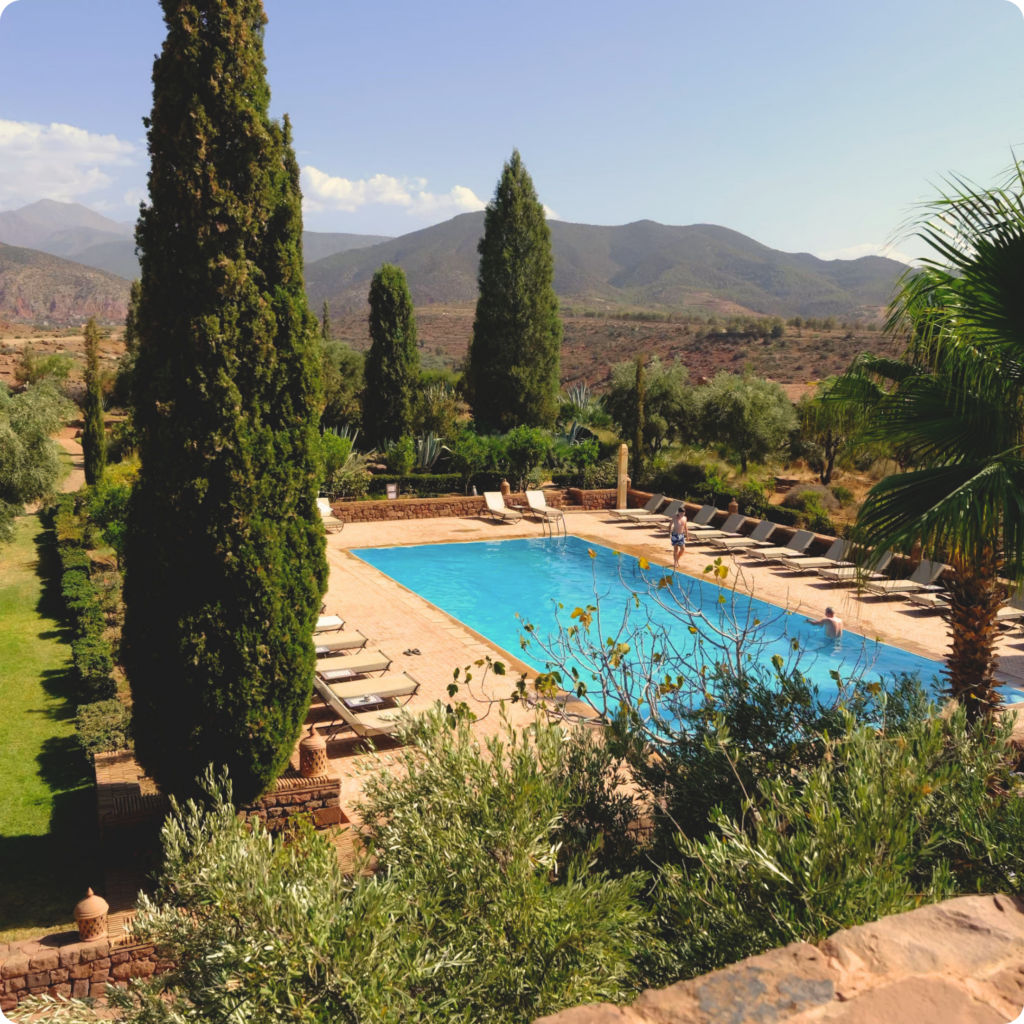
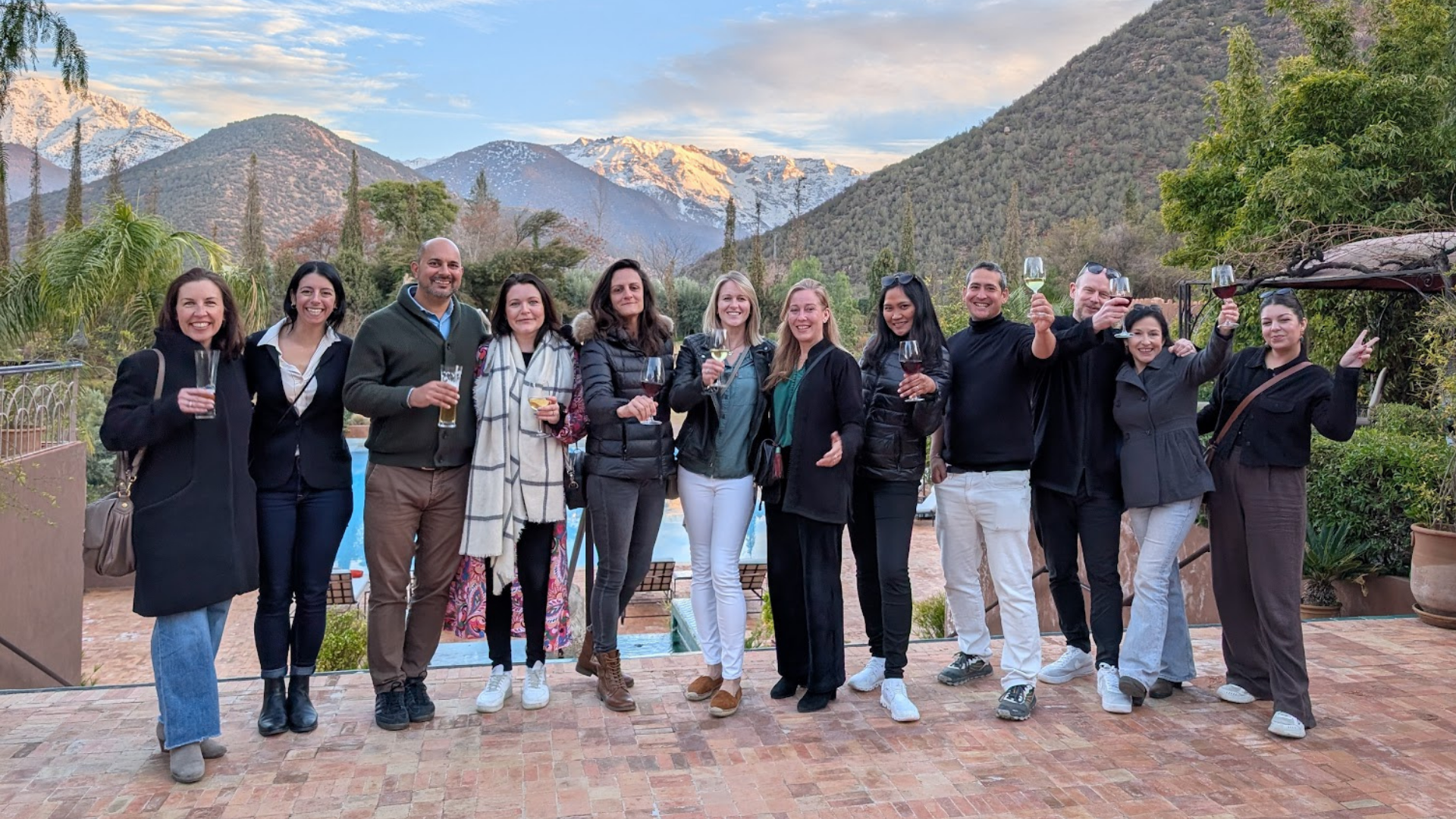
One of the reasons the High Atlas continues to gain momentum is its ability to pair raw landscape with thoughtful comfort. Accommodation ranges from well-positioned mountain lodges to foothill retreats and high-altitude refuges supporting trekkers. After long days outdoors, recovery is built into the experience through warm meals, sheltered spaces and attentive service. Properties such as Kasbah Angour offer an ideal base for exploring the foothill regions of the Atlas Mountains, or as a standalone mountain stay.
For advisors:
- Works well as a contrast to riads and city stays
- Can be positioned as active, restorative or both
- Strong appeal for couples, active travellers and repeat Morocco visitors
Experiences beyond the trek
The High Atlas offers far more than summit climbs. Scenic day hikes explore valleys and villages at a gentler pace, while overland journeys reveal remote areas less accessible on foot.
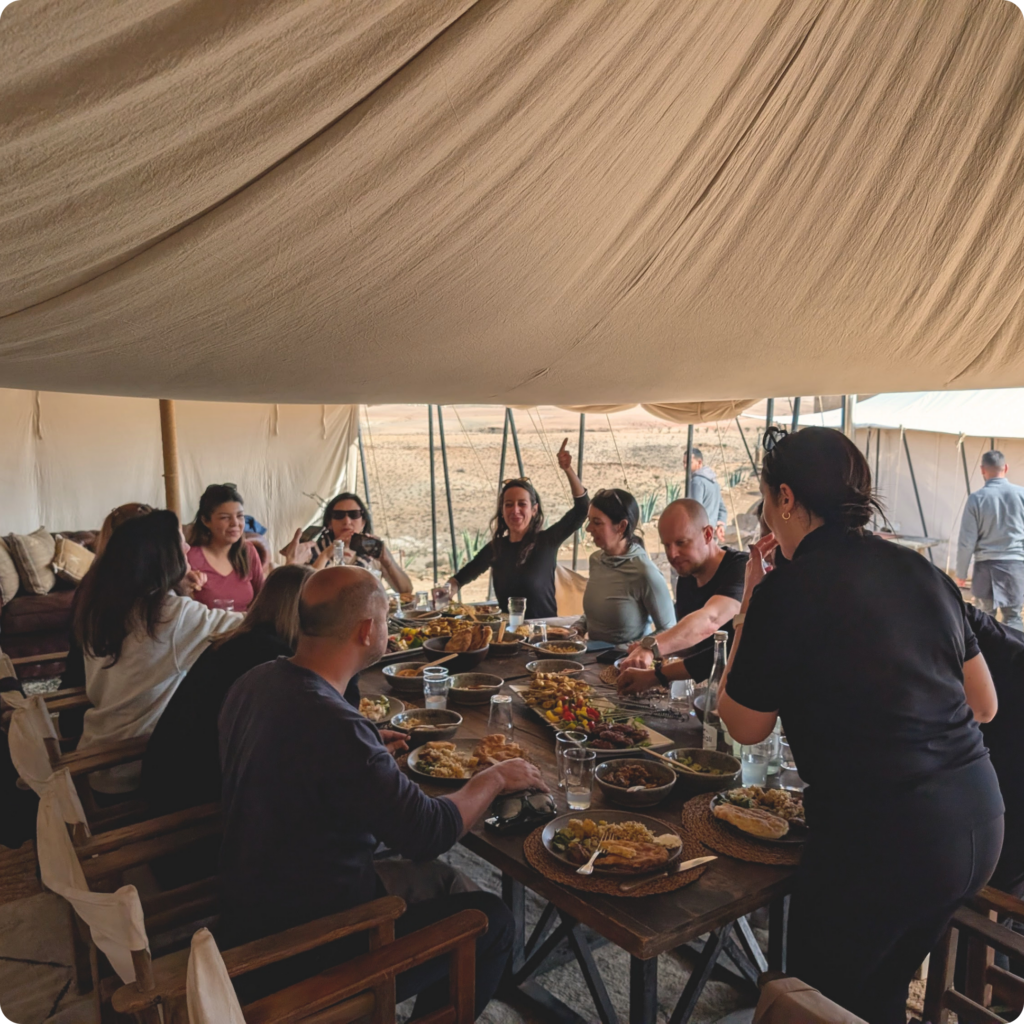
Many experiences are paired with private picnics or hosted lunches at mountain retreats, turning meals into natural pauses within the landscape. Seasonal ingredients, slow-cooked dishes and freshly baked bread add a strong sense of place.
This flexibility is key to how the High Atlas is sold:
- As a soft-adventure extension
- As a cultural contrast to Marrakech
- Or as a slower, scenic alternative to more structured touring
Positioning the High Atlas
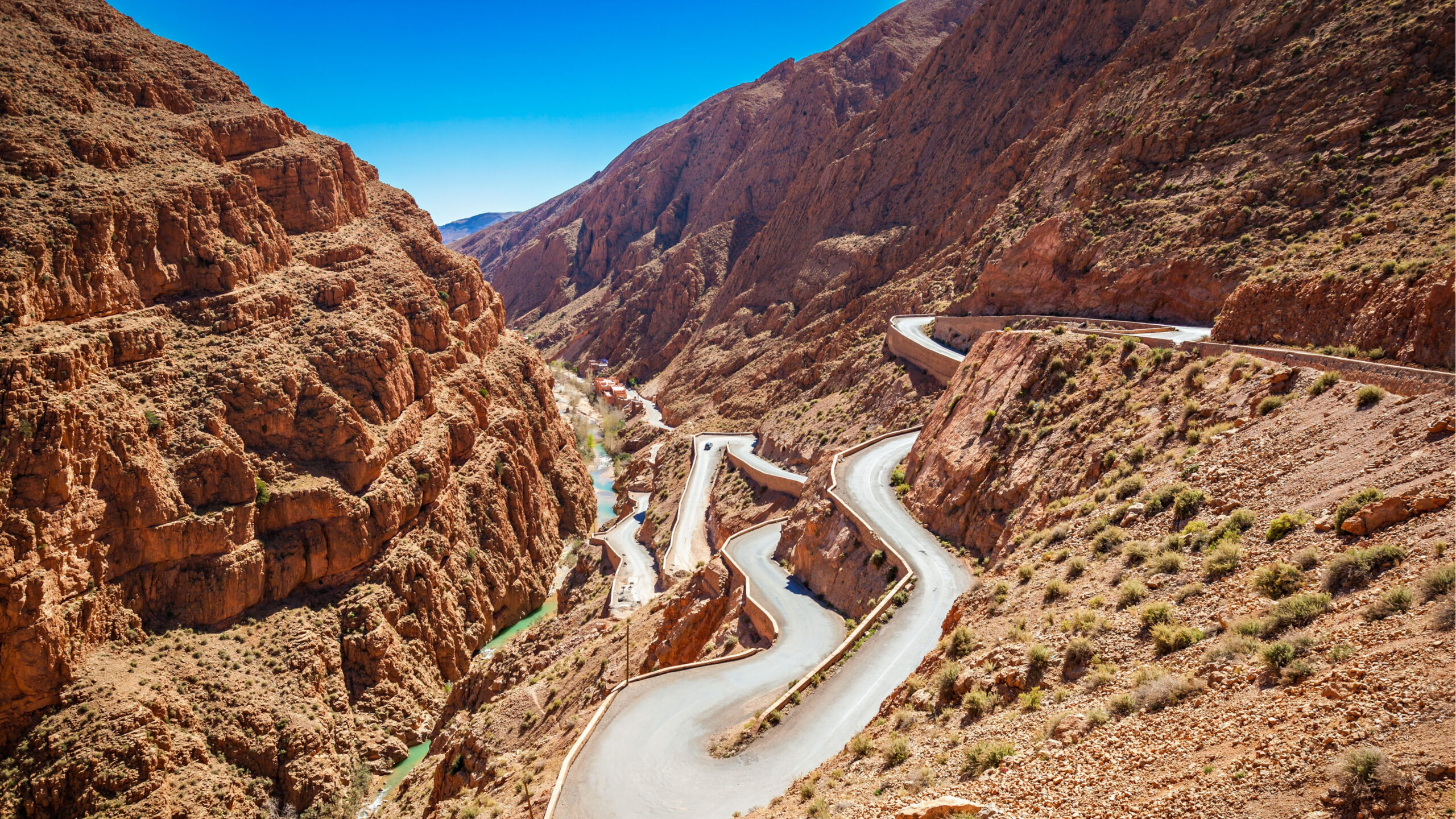
Ready to bring the High Atlas into a Morocco itinerary? Explore the options below or speak with our team for tailored planning support.

 " alt="">
  " alt="">
  " alt="">
  " alt="">
  " alt="">
  " alt="">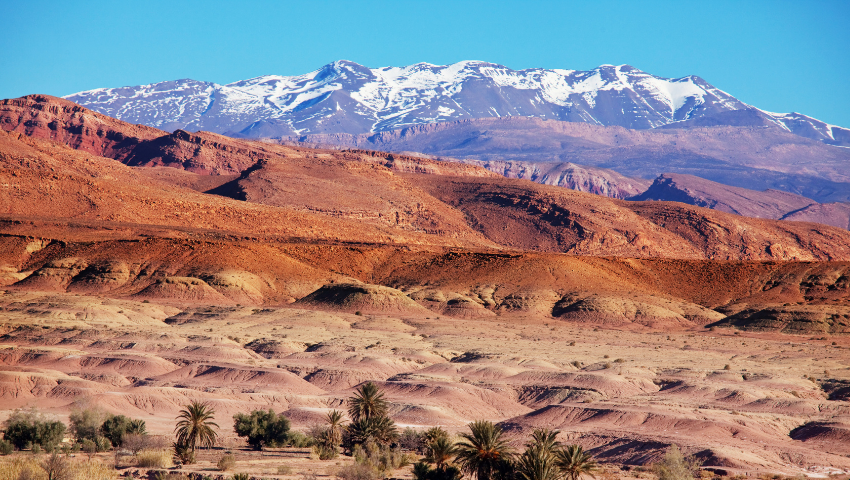
 " alt="">