

This itinerary is the perfect combination of culture, nature, and adventure. It offers an opportunity to explore the bustling city of Tokyo, the traditional hot spring town of Shibu Onsen, the historical and beautiful Kanazawa and Kyoto, the Hiroshima atomic bombing Memorial and the famous Miyajima Island, and the modern city of Osaka. This trip is designed for those who want to experience the best of Japan while also keeping a low carbon footprint. Throughout the journey, you will mainly use public transport and trains, which are not only convenient but also environmentally friendly. This itinerary is perfect for travelers who want to discover the rich culture and history of Japan while also making a positive impact on the environment.
Total carbon footprint, based on 2 pax travelling: 0.58 Tonnes of CO2

Itinerary
📍 Narita International Airport (NRT) to Central Tokyo: 1.5 h Haneda International Airport (HND) to Central Tokyo: 50 min
Upon arrival to Tokyo’s airport, our representative will be waiting to assist with sorting the appropriate transportation into the city (boarding the right train or selecting the correct shuttle bus).
The remainder of the day is free at leisure to explore Tokyo independently.
Overnight in Tokyo
Inclusions:
📍 Time: Start (guided tour): 09:00 Duration: 8 h *including pick-up/drop-off and transit times
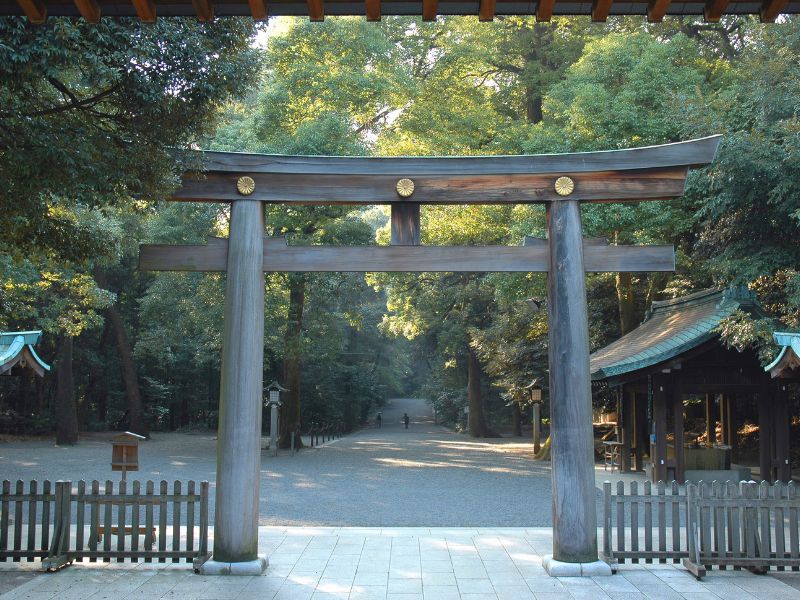
Meet up with the guide this morning in the hotel for the trip to Meiji Jingu, Tokyo’s most iconic Shinto shrine steeped in history and spirituality. Pass through the impressive torii gates leading to the shrine's inner forest of over 100,000 trees. Whether witnessing a traditional Shinto wedding procession or strolling through the lush grounds, Meiji Jingu provides an unforgettable experience of nature in the centre of Tokyo’s urban landscape.
Move on to the nearby districts of Harajuku and Omotesando, vibrant neighbourhoods that offer a unique and eclectic experience. Harajuku, renowned for its quirky street fashion, showcases an array of avant-garde boutiques and shops that cater to various subcultures. Omotesando, often dubbed Tokyo's "Champs-Élysées," presents a sharp contrast with its upscale, sophisticated atmosphere.
After lunch, use public transport to reach the beautiful Koishikawa Korakuen Garden, a traditional landscape that serves as an excellent example of Japanese garden design.
The final destination of the day is Asakusa. This charming district exudes a nostalgic charm and showcases
Tokyo's traditional side. At the heart of Asakusa stands the iconic Senso-ji, Japan's oldest Buddhist temple, drawing hordes of locals and tourists alike seeking blessings and cultural insight. The vibrant Nakamise Street leading to the temple offers a bustling market with a myriad of stalls selling traditional snacks, souvenirs, and handicrafts.
After a full day of touring the city, return to the hotel with the guide or part ways and continue exploring the city independently.
Note: The order of this itinerary may change depending on the location of your hotel.
Overnight in Tokyo
Inclusions:
☕ Breakfast, 🥘 Lunch
Today’s tour starts at 10:00. Meet the guide, who is sometimes accompanied by his adorable dog “Jack-san,” at Sasazuka Station, and head together to the cycling studio for a bicycle and helmet fitting. On the way, listen to some fascinating insights and entertaining anecdotes about the local neighbourhood, and get some useful explanations from the guide about Tokyo’s cycling etiquette and today’s itinerary.
When everything is ready, depart for today’s cycling tour. Leave Sasazuka with the guide, and cycle to the first location, enjoying the best of Tokyo’s urban design and natural environment on the way. Depending on the season, enjoy the surrounding foliage, which is especially beautiful in the spring when the plum and cherry blossoms bloom, and in the autumn, when the trees are a blaze of colour. There will be several cultural and architectural design stops along the way, where the guide will share interesting information and allow some time for photos.
Bike through Tokyo’s backstreets, local shotengai (small commercial streets) in hip neighbourhoods such as Shimo-Kitazawa, and some little-known parks, seeing the guide’s favourite areas and shops, and stopping for a break at a charming café.
Finally, enjoy the ride back to Sasazuka where the bicycles will be returned to the guide.
Enjoy the time at a leisure until the evening that begin at 17:00. Be sure to bring an appetite: this is one Tokyo street food tour that is sure to please the taste buds! Meet with a local, food-loving guide at the train station and set off into the streets for a Japan-style food crawl.
Veer off into the maze of laneways that fill the capital, passing street carts selling exotic snacks and diners perched on small metal stools. Stop to sample some of the items on offer, from barbequed meats to sweet desserts. Then enter an izakaya for a distinctly Japanese experience. These small, Japanese-style pubs are popular gathering places for friends and colleagues to gather after work for a beer. The food on offer is meant to be shared and is thus served almost like tapas. The guide will order up a few traditional izakaya favourites such as fried chicken wings or cold edamame. Sample the dishes and wash them down with a cold, local beer alongside the locals.
While dining, learn more about Japan’s culinary culture by observing the lively surroundings and hearing the guide’s personal stories. During the evening, stop at four or five venues, each with a distinctive style. These venues do not take reservations so the exact routing may change but the guide will ensure there is plenty to eat!
Following an evening of culinary and cultural indulgence, return to the hotel for a good night’s sleep.
Cycling Tour
Start: 10:00
Duration: 3 h to 4 h
Journey: 10 km (mostly cycling, a bit of walking and light sightseeing also involved).
Street Food Tour:
Start: 17:00
Duration: approx. 3 h
Overnight in Tokyo
Inclusions:
☕ Breakfast, 🍗 Dinner
📍 Tokyo Station to Yudanaka Station: 2.5 h
Today is a self-guided day.
Depart from Tokyo Station for Nagano via the Hokuriku bullet train, which can reach speeds of up to 260 kph. Upon arriving at Nagano Station, transfer to the limited express train that will run to Yudanaka Station, where a complimentary shuttle bus is provided by the night’s ryokan (traditional Japanese-style inn, available between 15:00 and 18:00.
Kokuya is a traditional Japanese-style hotel (ryokan) with a 400-year history. Its present owner is the 16th generation to run the place. The ryokan has six different, 100% natural hot springs, which are rich in health-giving minerals that benefit your muscles, joints, and skin.
The ryokan is located on the Shibu Onsen “spa street,” which has nine public onsen open for use. Take note of the local people strolling down the street in yukata (light robes) as they head for a soak in one of these hot spring baths.
Dinner tonight will be a kaiseki, or Japanese traditional meal, comprised of nine or more dishes. The meal is made up of seasonal dishes using only the freshest of local Nagano ingredients.
Overnight in Shibu Onsen
Inclusions:
☕ Breakfast, 🍗 Dinner
Today is a self-guided day.
Suggested Self-Guided Itinerary:
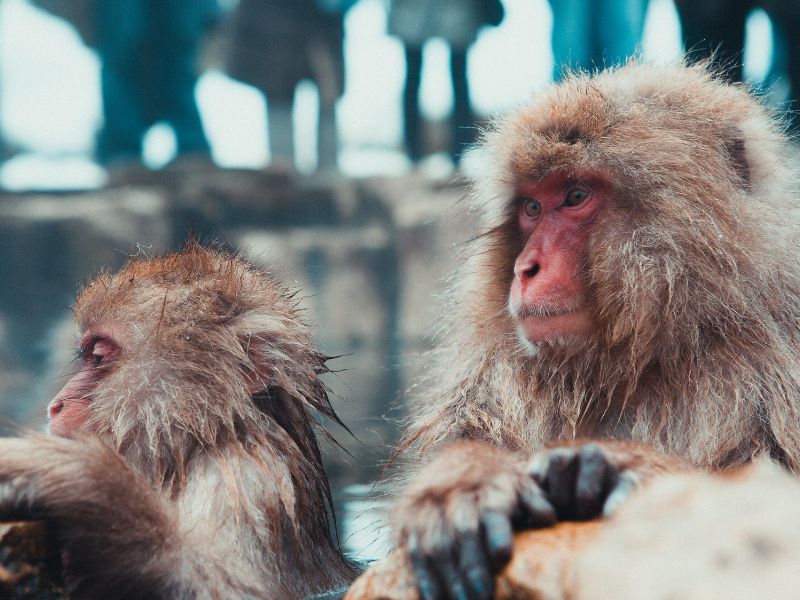
This morning, visit the Jigokudani Park, home to the famous Snow Monkeys. Jigokudani literally means “hell’s valley” due to the steam and boiling water that bubble out of small crevices in the frozen ground. It is in these hot spring baths where the resident Japanese Macaques like to soak. Going to the park from the nearest bus stops and parking lot can only be done on foot, which requires around half an hour of trekking. Comfortable footwear is strongly recommended (and warm clothes especially during the colder months).
The monkeys live in large social groups, and it can be quite entertaining to watch their interactions. Accustomed to humans, they can be observed from very close and almost completely ignore their human guests. Although the monkeys live in the area all year round, they are particularly numerous during the colder months (December – April) while less likely to be spotted in Autumn.
In the afternoon, it’s recommended to visit the nearby charming town of Obuse, a small town that features a number of traditional houses and stores. Over 100 houses in the town participate in an ‘Open Garden’ event. If this sign sits in front of a house, it means guests can freely enter the property and enjoy the gardens. A great way to get some insight into Japanese houses.
Obuse is also the home of Hokusai, the famous ukiyo-e (woodblock) painter during the Edo period, and Masuichi-Ichimura, the local sake brewery that produces high quality sake from locally produced rice.
Another amazing dinner will be served at the ryokan this evening.
Overnight in Shibu Onsen
Distance and journey time (approximation):
Shibu Onsen to Jigokudani parking lot: 5 min (bus) or 20 min (on foot)
Jigokudani parking lot to Monkey Park: 15 min (on foot)
Yudanaka Station to Kanbayashi Onsen bus stop or Kanbayashi Onsen-guchi: 9-15 min (bus)
Kanbayashi Onsen bus stop / Kanbayashi Onsen-guchi to Monkey Park: 30-35 min (on foot)
Yudanaka Station to Obuse Station: 45 min (train)
Inclusions:
☕ Breakfast, 🍗 Dinner
📍 Yudanaka to Kanazawa: 2h.
Today is a self-guided day.
Continue your journey to Kanazawa, a castle town that has become the center for classical and contemporary arts, from traditional handicrafts such as Kaga-Yuzen silk dyeing and gold-leaf production to modern artworks displayed at the 21st Century Museum.
Suggested Self-Guided Itinerary:
Start with the pristine Kenroku-en Garden, which is ranked as one of Japan’s top three gardens. Here you will find the oldest water fountain in the country, a couple of teahouses, and a large villa that used to be the retirement home of one of the richest clans in Kanazawa.
Adjacent to the garden is Kanazawa Castle, easily accessed through the Ishikawa-mon Gate, a designated Important National Cultural Asset.
End this afternoon’s tour at the 21st Century Museum of Contemporary Art designed by Pritzker Prize-awardees, Kazuyo Sejima and Ryue Nishizawa. The museum is known for its modern architecture and progressive exhibits, including Leandro Erlich’s “Swimming Pool,” which gives an illusion of being under or above the water.
Overnight in Kanazawa
Inclusions:
☕ Breakfast
Meet a local guide in the hotel lobby at 09:00 and set out on a full day adventure to learn about the samurai heritage of Kanazawa. Begin with a quintessential samurai martial arts experience.
Enter a traditional dojo and train in the art of kendo, a sword fighting technique that dates back to the Edo period, when samurai no longer fought in wars but wanted to retain their martial skills. Using wooden training swords, guests will learn the basic skills, stances, and movements that were essential to the samurai in battle. This is a rare chance to don a full set of kendo armor and mask for some training and commemorative pictures.
After a stop for lunch, continue on with a visit to the Nagamachi samurai district, a former neighbourhood of opulent traditional villas. Walk the walled streets where high level Kaga Clan samurai once lived, and enter the beautifully preserved Nomura Samurai House. The elegant rooms here offer fine views of an expertly designed garden.
Visit the Maeda Samurai Museum, a small but fascinating exhibition space of antique armor, swords, calligraphy, and other daily items from the samurai era. This is a great spot to appreciate how samurai were not only warriors, but also cultural elites who valued skills like calligraphy and tea ceremony.
Finish the day with a special hands-on viewing of authentic samurai swords. A local business owner from a former samurai family has opened his private collection of artifacts for personal inspections, and guests will have the opportunity to see the swords up close and hear their history. Feeling the weight of a centuries-old samurai sword in one’s hands is truly a once-in-a-lifetime experience that will bring this Kanazawa samurai experience to a fulfilling close.
Part ways with the guide and continue exploring the city independently with a new appreciation for the role that the samurai once played in Japanese society.
Overnight in Kanazawa
Time:
Start (guided tour): 09:00
Duration: 8 h
Overnight in Kanazawa
Inclusions:
☕ Breakfast
📍 Kanazawa Station to Kyoto Time: Start: 09:30 Duration: 4 hDistances and journey time: Kanazawa Station to Kyoto Station: 2.5 h Station: 2.5 h
Today’s walk begins at 09:30. Make the most of being in a city blessed with a number of beautiful gardens, starting off with one of the most famous, Kenroku-en. This sprawling landscape has been ranked as one of Japan’s top three gardens for centuries, and is steeped in history and tradition.
Kenrokuen is best explored with a local guide who can point out all of the details that most visitors just walk past. It’s a beautiful sight in any season, whether it be prime cherry blossom season, or winter when trees are protected from heavy snow with ropes that are tied into a decorative conical formation.
Next, enter Gyokusen-en, a smaller-scale garden that provides a contrasting atmosphere to the open spaces of Kenrokuen. Make a stop at the tea house – the oldest of its kind in Kanazawa. The tea master here is especially receptive to foreign guests and is dedicated to not only providing a tea ceremony in its truest form, but also ensuring guests understand the intricacies of the ritual. Refreshed from a bowl of matcha tea, explore the garden and stroll the pathways that wind through this intimate natural setting.
After the tour get on the bullet train to Kyoto, the reigning cultural capital of Japan, home to 2,000 shrines and temples with 17 UNESCO World Heritage Sites.
Overnight in Kyoto
Inclusions:
☕ Breakfast
📍 Time: Start (guided tour): 09:00 Duration: 8 h *including pick-up/drop-off and transit times
Today’s tour starts with a visit to one of Kyoto’s most iconic sites: the Fushimi Inari Shinto Shrine. A lavishly decorated building houses the goddess of rice, and thousands of orange torii gates stretch up the mountainside in long tunnels. Unlike any other shrine in Japan, this is an ideal spot to understand how Shintoism is tied to respect for nature.
Board a train to Sanjusangendo, a stunning Buddhist temple often overlooked by tourists. A mesmerizing display of 1001 life-sized golden Buddhist statues awaits inside the world’s longest wooden building, sure to be one of the most memorable sights of the entire trip.
Take a taxi to the entrance of Nishiki Market, a long covered street of shops and stalls often called “Kyoto’s kitchen.” From traditional to sellers of tofu, fish, and pickles to shops showcasing knives and handicrafts, there is a tantalizing amount of things to see and taste here.
Don’t get too full snacking in the market, as lunch is next at a nearby restaurant. The guide will suggest locations based on the guests’ preferences (guests should notify guide of dietary restrictions at the start of the tour).
After lunch, travel to Nijo Castle, an ornamental palace built for the shogun in the early 1600s. The beautiful building is known for its finely painted walls and “chirping nightingale” floors that squeak under the feet of intruders. Walk the halls, see the audience chambers, and experience what it was like to visit the military ruler of Japan in the classic era of samurai.
Hop aboard the subway for a short ride to the eastern foothills of Kyoto. The final location of today is Nanzenji Zen Temple, a quiet retreat where monks have lived in peaceful repose since 1291. See the famous Zen rock garden whose meaning is left up to the viewer. Is it meant to be islands in a calm ocean, or a depiction of wild animals crossing a raging river?
After a full day of sightseeing, part ways with the guide and return to the hotel or continue to explore independently.
Part ways with the guide and continue exploring the city independently. Overnight in Kyoto
Inclusions:
☕ Breakfast, 🥘 Lunch
Today is a self-guided day.
Suggested Self-Guided Itinerary: Nara and Fushimi-Inari
For 74 years during the 8th century, Nara was Japan’s capital and many of the temples and shrines built at that time still remain.
Nara is just a small town, with most of its main tourist spots located around Nara Park. It’s also here that one can encounter quite a great number of tame deer. Visit Todaiji Temple, the world’s largest wooden building home to Japan’s largest Buddha, or Kasuga Taisha, Nara’s most celebrated shrine.
In the afternoon get back to Kyoto and head together to Fushimi Inari Taisha. One of the most unusual and iconic Shinto shrines in Japan, Fushimi Inari's paths are lined with thousands of vermilion torii gates following trails inside the forests of Mt Inari.
Established in 711AD the shrine, which was also featured in “Memoirs of a Geisha”, is famous for the impressive contrast and mystical atmosphere created by the contrasting colours of the torii and those of the surrounding nature.
The light hike up to the top of the mountain and back will take up to three hours and will grant the visitors numerous photo opportunities in this unique place.
From the top, a beautiful view of the city of Kyoto and the hills surrounding it can be enjoyed.
Distance and journey time (approximation):
Kyoto Station to Nara Station: 45 min
Overnight in Kyoto
Inclusions:
☕ Breakfast
📍 Kyoto Station to Hiroshima: 2h
Today is a self-guided day.
Today you will venture by train to Hiroshima.
Suggested Self-Guided Itinerary:
We suggest heading to Genbaku Dome-mae, the nearest station to the heart-rending A-Bomb Dome, the ruins of the former Industrial Promotion Hall of Hiroshima. From the dome, crossover Motoyasu Bridge and stop by the Children’s Peace Monument that features a statue of a young girl and a number of booths filled with colorful paper cranes.
Heading towards the museum, pass by the Cenotaph for the A-Bomb Victims, designed by the 1987 Pritzker Prize winner, Kenzo Tange. Below the arch-shaped stone is a chest that holds the registry of those who perished from the bombing.
Head to the Peace Memorial Museum, which displays the history of Hiroshima before the bombing and exhibits a moving collection of articles, from the personal belongings left by the victims to the damages caused by the bombing.
Near the park are some local restaurants where you can have lunch. We highly recommend okonomiyaki, or “Japanese pancake” with cabbage, pork, ginger, nori, and a special sauce.
Overnight in Hiroshima
Inclusions:
☕ Breakfast
Today’s activity can start at 09:30 or 13:00. Get the blood pumping with this enjoyable, scenic experience of kayaking in Miyajima. Meet the instructor on the shores of mainland Hiroshima for a 30-minute introductory lesson. Learn how to navigate the kayak and get valuable tips about paddling techniques.
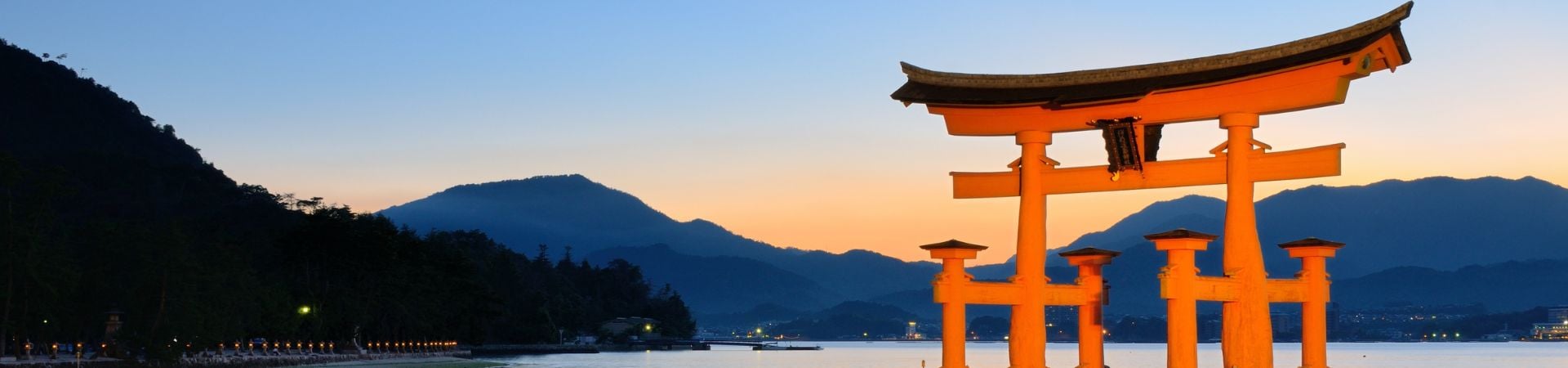
Then set off for a paddle across the Seto Inland Sea. Enjoy the views of Hiroshima and Miyajima Island, appreciating the peacefulness of the waters between the shores. Paddle out to the UNESCO World Heritage Site of Itsukushima Shrine, watching as the details of its impressive torii gate begin to appear as the kayak approaches. Admire the vermilion gate up close, enjoying a different point of view from what most tourists get to see.
Continue around the shoreline of Miyajima, seeing its charming old town with towering Mt. Misen in the background. Find a quiet stretch of beach and go ashore for a short break before paddling back to the meeting point. Say farewell to the instructor and journey back to Hiroshima for a well-deserved rest.
Time:
Start: 09:30 or 13:00
Duration: 3 h
Overnight in Hiroshima
Inclusions:
☕ Breakfast
Today is a self-guided day.
The rest of the day is at leisure. After checking into the hotel, start exploring the lively streets of Osaka, Japan’s culinary capital. Osaka’s flamboyance, fun-loving people, and amazing food make up for what it lacks in tourist attractions.
Suggested Self-Guide Itinerary:
In Osaka, the following places are recommended:
Dotonbori
Dotonbori is a restaurant mecca which has long-been referred to as Osaka’s entertainment district. It is well-known for its bright neon lights, energetic shop owners and food stalls that are filled with some local Osakan delights such as takoyaki (octopus balls) and fugu (poisonous puffer fish).
Umeda
Umeda is where most of the city’s most modern buildings are found. Some of the notable buildings are HEP (Hankyu Entertainment Park), which features a big Ferris wheel and is perfect for some last-minute shopping; Kitashinchi District, housing some of the city’s culinary specialties; and the Umeda Sky Building, a pair of skyscrapers connected in “mid-air”, built in an unusual architectural form rarely seen anywhere in the world. Feel the fresh air and enjoy 360-degree panoramic views at the ‘Floating Garden Observatory’.
Today’s tour begins at 17:00 or 18:00 depending on whether it is shared or private. Osaka is an epicurean’s delight. Indeed, the motto that the city’s exuberant inhabitants live by is kuidaore – “to eat oneself bankrupt.”
The first stop will be to try a new style of tempura in an eatery tucked away in a small alleyway. Old favourites such as shrimp tempura, and more experimental combinations such as asparagus tempura and cheese can be found on the menu.
Next, head to a restaurant specialising in wagyu beef dishes. Often referred to as the most expensive beef in the world, wagyu beef is of a superb quality, and is on many a gourmet’s wish list. Enjoy the melt-in-the-mouth textures with a refreshing cocktail.
After walking around the atmospheric backstreets, the final stop will be a small teppanyaki restaurant to try some delicious gyoza and negiyaki cooked on a metal plate right in front of guests.
Bid farewell to the affable guide, and either return to the hotel or go for a stroll around the neighbourhood to take in the sights. (D)
Time:
Start: 17:00 (shared), 18:00 (private)
Duration: approx. 3 h
Overnight in Osaka
Inclusions:
☕ Breakfast, 🍗 Dinner
📍 Namba Station to Kansai Airport: 45 min
The rest of the day is at leisure until the scheduled transfer to Kansai International Airport.
*Japan Rail Pass can be used for transfers using JR trains (with exceptions).
Inclusions:
☕ Breakfast
You might also like...
Here is a selection of products that may also fit the needs of your client.
Become a partnerYou might also like...
Here is a selection of products that may also fit the needs of your client.
Become a partner
Get in touch
Our sales team is on hand to ensure that the process of working with us is as smooth as possible. If you should have any questions, feel free to reach out to them.

Sophie Rowley
Sales Director - EuropeEXO Sales Team

Amanda Pilar
Director of Sales - Americas & ANZSales

Maya Caspary
Sales Manager - Germany, Austria, SwitzerlandEXO Sales Team

Vicky Sampson
EXO Sales Team

Rubby Alvarez
Sales Manager - Latin AmericaEXO Sales Team

Nick Ghosh
Chief Commercial OfficerEXO Sales Team

Alex Shaw
Sales Manager - Northern EuropeEXO Sales Team

Pantanida Jantsakool Pitz
General Manager - German MarketEXO Sales Team

Kate Winslow
Sales Manager - North AmericaEXO Sales Team