
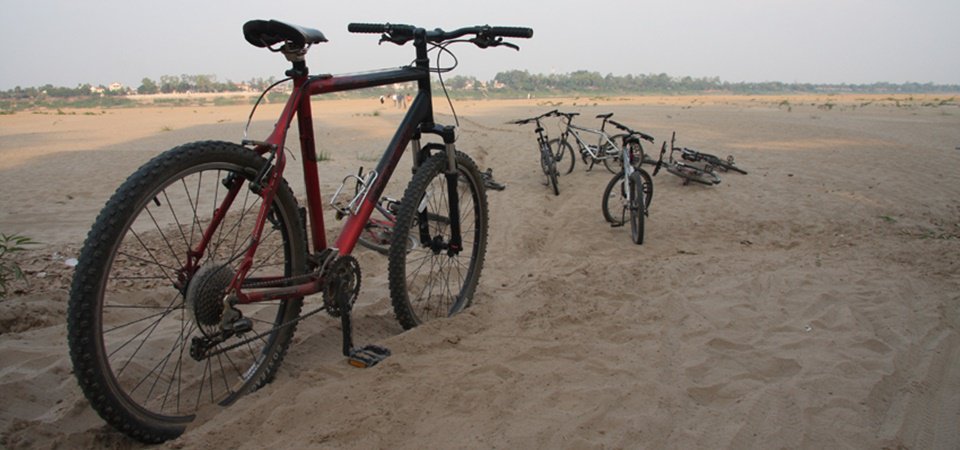
Bike through remote regions of Cambodia and delve deeper in to the culture, history and nature of this spectacular country. Feel the modern energy of Phnom Penh and relax in the sleepy backwaters of Kratie. Roam through ancient temples and connect with local traditions in the countryside.

Itinerary
📍 Transfer from Airport to Hotel: 30 mins Cyclo Tour: 4 hours
Welcome to Phnom Penh! The capital of Cambodia, Phnom Penh sits at the confluence of the Mekong and Tonlé Sap Rivers, and was once considered one of the most beautiful cities in the Orient. Despite its recent, turbulent history, it still retains much of its former colonial charm. Wide, tree-lined boulevards and a range of rich architecture reflect the city’s glory days and add to the allure of the city, where Asian and Western traditions meet in a fascinating way.
Before embarking for the day, enjoy lunch along the riverfront. Follow lunch with a short Cyclo Tour of the city, the original form of transport before the invention of those theoretically advanced motorized carriages.
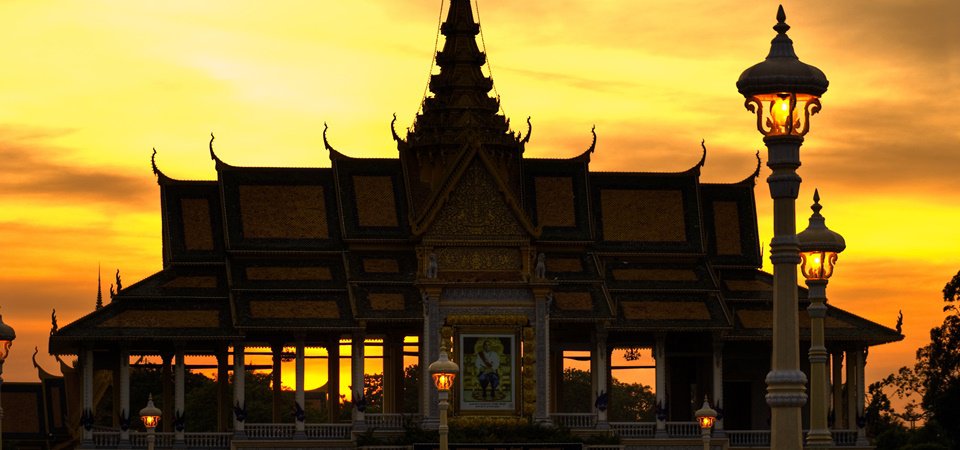
Begin with the 19th century Royal Palace and its Silver Pagoda, named for the over 5,000 heavy silver tiles that cover its floors. The temple is known for its marvelous collection of Buddhas in gold, silver, crystal, and bronze.
Continue to the nearby National Museum. Built in traditional Khmer style, it houses the world's foremost collection of ancient Khmer artistic, archaeological, and religious artifacts from the 4th to the 13th centuries (over 5,000 unique pieces.) The National Museum is known not only for its repository of artifacts, but also for housing a massive colony of bats, who roost in its Khmer style roof.
After the visits, head back to the hotel for relaxation. Dinner this evening will be served at Romdeng, an NGO restaurant where former street children are taught the principles of hospitality. The restaurant is located in the heart of the city center, in a restored colonial building surrounded by an atmospheric garden.
Overnight at Phnom Penh
Inclusions:
🥘 Lunch, 🍗 Dinner
📍 Transfer from Oudong to hotel: 1 hour Transfer from Hotel to starting point: 30 mins Cycling distance up to 30 km Difficulty: Easy
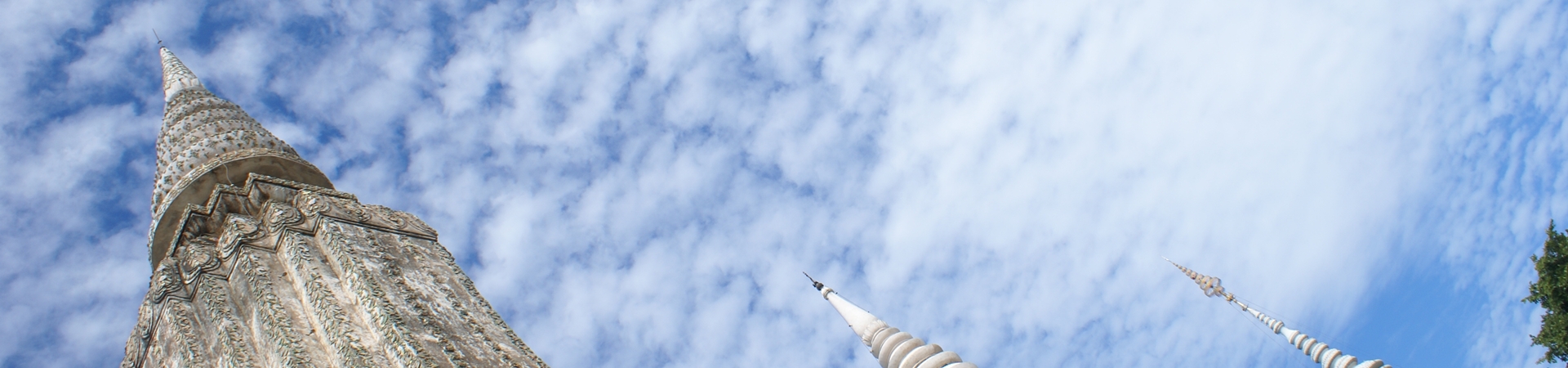
Begin the day with a transfer to the outskirts of the city where the day’s tour will begin. Embark on a 30 kilometer journey through the countryside of Phnom Penh, before reaching the town of Oudong. The ultimate destination will be Phnom Preah Reach Trob, otherwise known as Oudong Mountain, the former the capital of Cambodia before it was moved to Phnom Penh. On the ride out, the cityscape of Phnom Penh fades quickly and gives way to rural Cambodia. This area is illustrated by stilted houses, pagodas, rice paddies, ox carts, and friendly locals. Before lunch, arrive at the base of the mountain. It’s a steep climb to the top, but the view is worth it! As the pale stones of the temple gleam brightly in the midday sun, it’s recommended to bring sunglasses.
After the visit, head back to the city.
Overnight in Phnom Penh
Inclusions:
☕ Breakfast, 🥘 Lunch, 🍗 Dinner
📍 Transfer from hotel to starting point: 20 minutes Cycling distance up to 90 km Difficulty: Medium
Start off Day 3 by joining the locals of Phnom Penh as they make their daily commute across the Mekong by ferry. The far bank of the river contrasts sharply with the sprawling urban development of Phnom Penh… the perfect place to enjoy a bike ride!
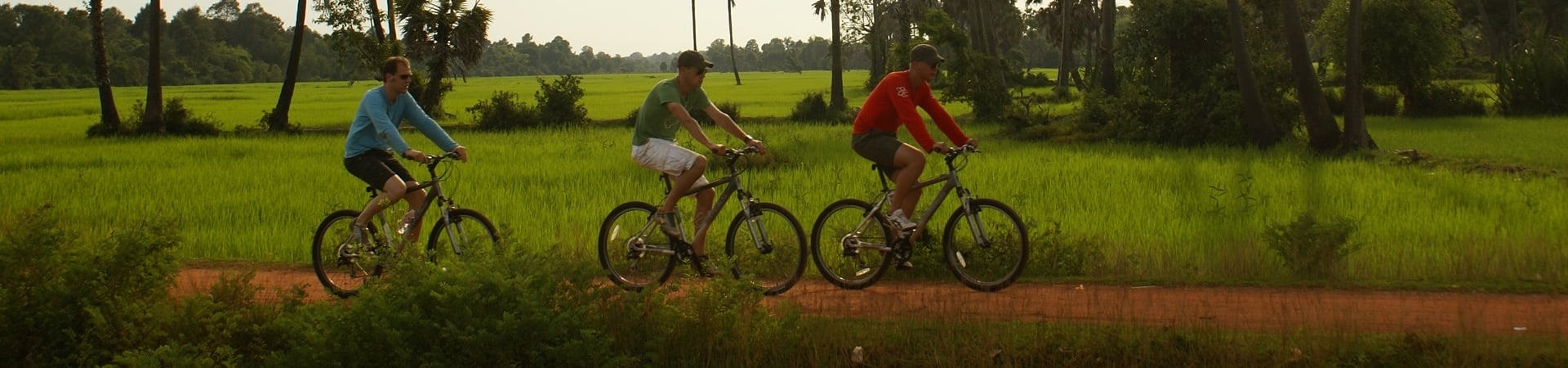
Across the river, local traffic consists of small motorbikes, miniature tractors, horse-drawn carriages, cattle, and the occasional water buffalo. Along the riverbanks silk weavers still ply their trade and farmers tend to orchards and rice fields. Modern temples and pagodas dot the landscape on this pleasant cycle.
As the kilometers continue to count, the countryside deepens. Sealed roads give way to dirt roads and bumpy tracks. Cross the Mekong once more and then cycle into Kampong Cham, a beautiful riverside city.
Overnight at Kampong Cham
Inclusions:
☕ Breakfast, 🥘 Lunch, 🍗 Dinner
📍 Transfer from Chhlong to Kratie: 1 hour Cycling distance up to 72 km Difficulty: Medium
Day 4 features a series of river crossings and temple visits from Kampong Cham to Kratie. The Mekong ducks in and out of sight as the road meanders with the river. After crossing the river to Chhlong, we find ourselves in a unique area of Cambodia. The villages on this side of the river are primarily friendly Muslim minority peoples, rare for Cambodia, which is a mostly Buddhist country.
The road continues on to Kratie. Stop here briefly before crossing the river once more to the island of Koh Trong, a favorite former locale for Khmer kings. As the sun begins to dip, take a short trip to the island’s temple to participate in a tree planting ceremony—part of a local conservation effort to reforest this beautiful island.
Overnight in Kratie
Inclusions:
☕ Breakfast, 🥘 Lunch, 🍗 Dinner
📍 Transfer from old Highway 7 to afternoon starting point: 1.5 hours Cycling distance up to 70 km Difficulty: Medium
In the morning, continue the journey upriver. Cross the Mekong and begin cycling northward from Kratie. Keep an eye out for some of the local livestock such as lazy cows, wallowing buffalo, and wayward chickens.
There will be a shortstop about sixteen kilometers from Kratie in the town of Kampi. This dusty town may not seem like much but the river nearby is home to the famed Irrawaddy dolphins.
Due to habitat loss and pollution, these species are among the last of their kind... but here they are numerous! Climb aboard a local boat and head out to the river. To keep from disturbing the dolphins too much, the boatman will shut off his engine after a short while and steer the boat in between the various islets and sandbars. Keep a sharp eye out for the dolphins as they frolic through the muddy waters of the river. After the dolphin cruise, the road turns away from the river and heads for more open country.
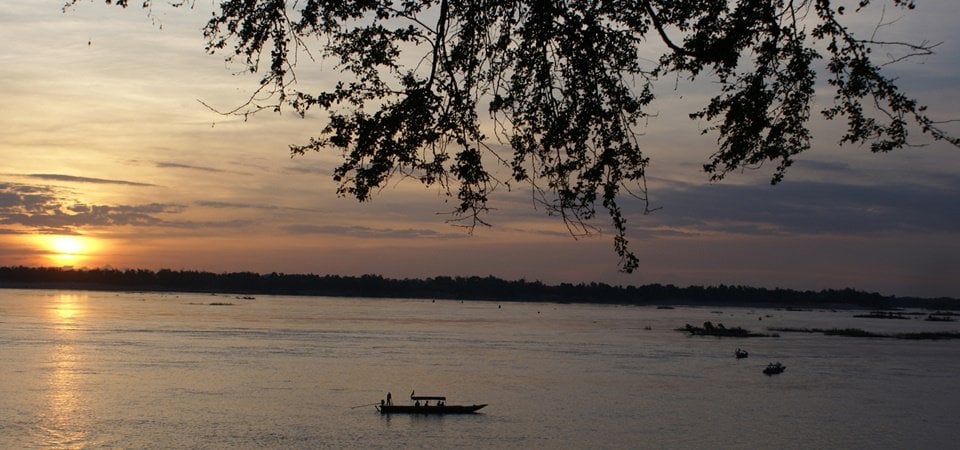
Take an hour and a half transfer from here to the lunch stop for today, where the bicycles will be set down once more for an afternoon ride through the countryside. The landmark to look for today is a bridge spanning the Sekong River (so named for the confluence of the Mekong, Kong, and San rivers). Idle boats bob down the current and a few fishermen cast their nets as the sun begins to set.
Overnight at Stung Treng
Inclusions:
☕ Breakfast, 🥘 Lunch, 🍗 Dinner
📍 Transfer from Stung Treng to the starting point: 2 hours Transfer from Preah Vihear to Sra Em: 30 minutes Cycling distance up to: 60km Difficulty: Medium edium
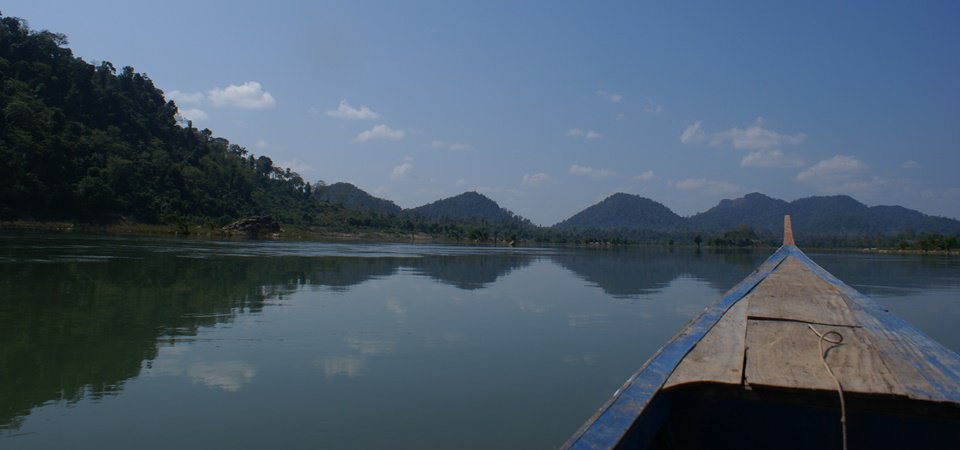
Today is a great day! Cycle about 60km up the Mekong to the Laos border where you reach the incredible Sophea Mit Waterfalls. The Mekong currents are so strong here. Relax a while and enjoy before transferring about 170 km through the changing Cambodian countryside toward the remote, ancient temple city of Koh Ker.
We arrive at our local village homestay in the late afternoon and check in. The rest of the day is yours to completely unwind—stroll through the quiet village lanes, watch the rural sunset, or simply relax on the porch, enjoying the peaceful rhythm of Cambodian country life before a home-cooked dinner.
Overnight at Homestay Koh Ker
Inclusions:
☕ Breakfast, 🥘 Lunch, 🍗 Dinner
📍 Transfer from Sra Em to Koh Ker: 2 hours Cycling distance up to: 60km Difficulty: Medium
After breakfast, take a short transfer to the fabulous ancient capital Koh Ker. Koh Ker, built around 922 CE, is an ensemble of around 70 temples, including the highest pyramid style temple of Cambodia. This amazing archaeological site is on its way to being classified by UNESCO’s World heritage. After that, our cycling journey brings us to the mysterious temple of Beng Mealea, often described as the ultimate "Indiana Jones" experience. Built in the 12th century to the same floorplan as Angkor Wat, this sprawling temple has been left largely unrestored, completely reclaimed by nature. You'll trade your bike for a foot path, scrambling over collapsed sandstone blocks, walking along wooden boardwalks, and exploring hidden galleries choked by massive banyan tree roots and creeping vines. It is a hauntingly beautiful, wildly atmospheric finale to an unforgettable day of discovery.
Take lunch nearby the temple, and then begin cycling on lovely roads for the final destination tonight: Siem Reap.
This evening, have dinner at Spoon Café restaurant, a very tasty experience. Your meal helps build a new life for the students to gain experience in hospitality from their school.
Overnight at Siem Reap
Inclusions:
☕ Breakfast, 🥘 Lunch, 🍗 Dinner
Enjoy the day at leisure until the transfer to the airport or join us for another tour of the Angkor area. You can even fly to Sihanoukville and spend a few days on her lovely islands.
Optional on Day 8 : Cycle the Jungles and Temples of Angkor (B/L/D)
Stay another day and set out directly from your hotel to explore Angkor Wat via bicycle this morning, pedaling through dense jungles of the magnificent temples of Angkor.
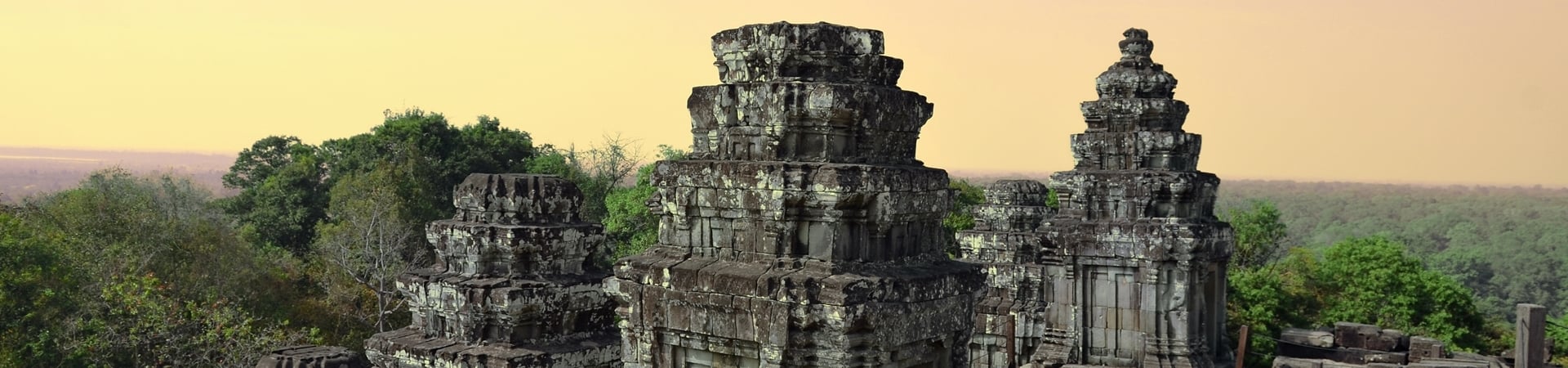
Begin with a visit to Ta Prohm temple (a setting of one of the Tomb Raider films), built in the mid-12th to early 13th centuries in dedication to Jayavarman VII’s mother. Ta Prohm is unique in that it has been left largely as it was found: overgrown by jungle, trees and vines, with many parts of the temple crumbling to the ground. This makes Ta Prohm one of the most picturesque and memorable of the Angkor temples.
From Ta Prohm, dive back into the jungle and pedal through hidden passages to the ruins of Ta Nei (Grandfather Nei) and Preah Khan (dedicated to Jayavarman VII’s father) before heading to Angkor Thom. This was the last capital of the Great Khmer Empire under the reign of Jayavarman VII. An eight meter high wall draws a perfect square around the city ruin. Enter through the ancient East Gate. On each side of the entrance path a row of fifty-four gods and demons hold the sacred Naga snake of Hindu lore.
From the walls of Angkor Thom, head inward for Bayon Temple in the exact center of the city. This 12th century masterpiece is a study in grandeur and is well-known for its fifty-four towers with enigmatic faces representing the fifty-four provinces of the Great Khmer Empire. The Terrace of the Elephants and the Terrace of the Leper King are also must-visits as they are both known for their intricate bas-reliefs.
Southward now, through Angkor Thom to the famous Angkor Wat, the largest religious monument in the world. It was originally constructed as a Hindu temple of god Vishnu gradually transforming into a Buddhist temple toward the end of the 12th century. Built during the reign of King Suryavarman II, Angkor Wat is constructed following the model of the temple mountain symbolizing Mount Meru, the home of the gods. Inside the temple, the walls are covered with stone carvings and bas-reliefs depicting Hindu mythology and the wars Suryavarman II fought during his reign. Angkor Wat is well known for the more than 2,000 Apsara dancers decorating the temple. Construction is thought to have taken around thirty years of intensive labor. Today, Angkor Wat is featured on Cambodia's national flag as the temple symbolizes the soul of the Khmer people.
One of the first Western visitors to the temple was António da Madalena, a Portuguese monk who visited in 1586 and said that it "is of such extraordinary construction that it is not possible to describe it with a pen, particularly since it is like no other building in the world. It has towers and decoration and all the refinements which the human genius can conceive of."
Transfer back to the hotel and relax until this evening’s farewell dinner at Cambodia’s first farm-to-table restaurant, Lum Orng. It is located in a village on the edge of Siem Reap, departure point for excursions to Angkor Wat. Here, owner-chef Sothea Seng cooks New Mekong Cuisine from Cambodia and beyond, based on seasonal produce from his farms, local markets, and growers across the region.
Tomorrow morning after breakfast, transfer to the airport for your onward flight.
Inclusions:
☕ Breakfast
You might also like...
Here is a selection of products that may also fit the needs of your client.
Become a partnerYou might also like...
Here is a selection of products that may also fit the needs of your client.
Become a partner
Get in touch
Our sales team is on hand to ensure that the process of working with us is as smooth as possible. If you should have any questions, feel free to reach out to them.
Sophie Rowley
Sales Director - EuropeEXO Sales Team

Amanda Pilar
Director of Sales - Americas & ANZSales
Maya Caspary
Sales Manager - Germany, Austria, SwitzerlandEXO Sales Team
Vicky Sampson
EXO Sales Team

Rubby Alvarez
Sales Manager - Latin AmericaEXO Sales Team
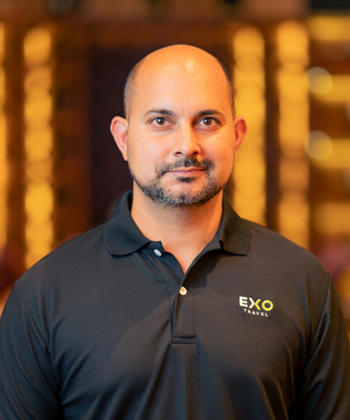
Nick Ghosh
Chief Commercial OfficerEXO Sales Team
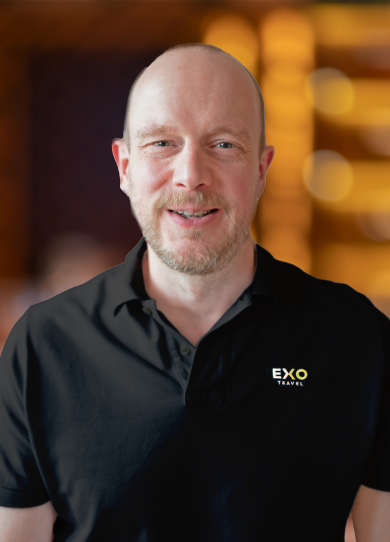
Alex Shaw
Sales Manager - Northern EuropeEXO Sales Team
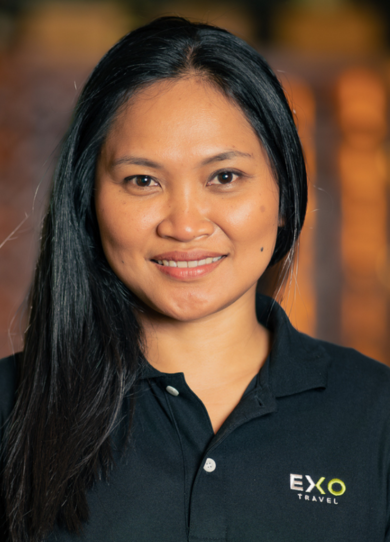
Pantanida Jantsakool Pitz
General Manager - German MarketEXO Sales Team

Kate Winslow
Sales Manager - North AmericaEXO Sales Team